Production figures lag the shift.
Mining · Mobile volumetric scanner
MVS
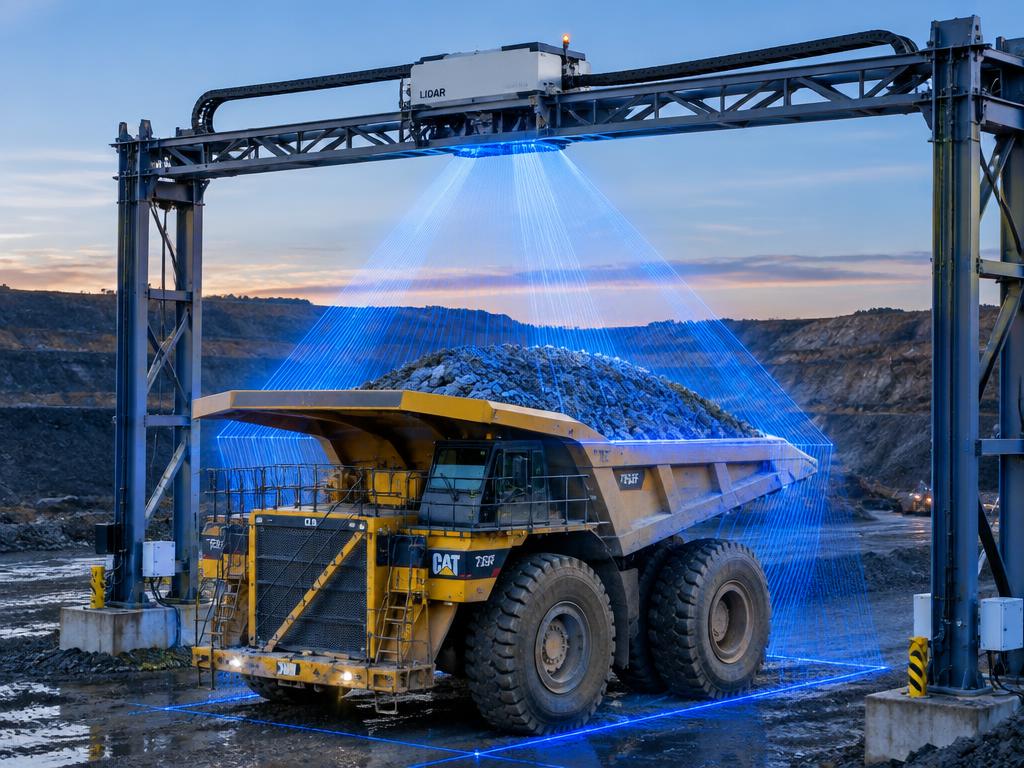
Volume, tare and net — in 10 seconds or less.
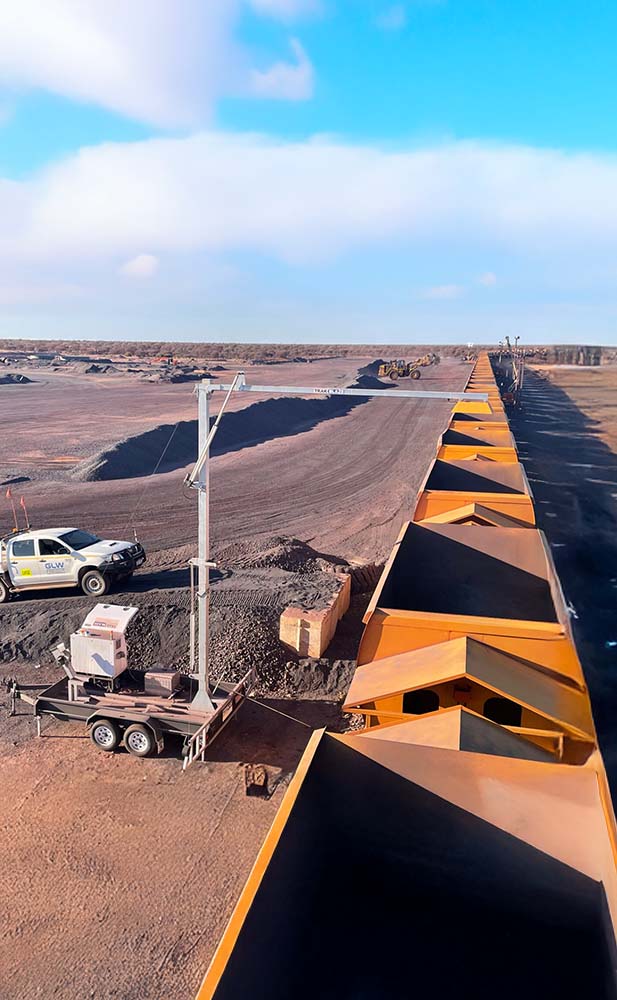
MVS is a mobile LiDAR volumetric scanner that delivers loaded, tare and net volume straight to your industrial data network, near real time.
~10 sResults
2 x LiDARLasers
MODBUS TCPOutput
The problem / Operational challenges
Why operators switch.
Laser contamination goes unnoticed until data is wrong.
Scanner data lives in a silo away from the control system.
The result / Measurable value
Less cost. More certainty.
Save Money
Industry-standard MODBUS TCP means it plugs into what you already run.
Save Time
Production-critical parameters calculated in approx. 10 seconds.
Reduce Wear & Tear
Laser status flags for remote maintenance, so you fix contamination before it costs data.
How it works / From load to readout
Precision, step by step.
- 01
Two LiDAR lasers gather raw data over TCP.
- 02
Scan processing software computes loaded, tare and net volume.
- 03
Data delivered to the industrial network via MODBUS TCP.
- 04
Data-valid and laser-status flags for remote monitoring.
Technical data / The details that matter
Specifications.
Data items delivered
| Loaded volume | m³ |
|---|---|
| Tare volume | m³ |
| Net volume | m³ |
| Data valid flag | Valid / not valid |
| Laser status flag | Error / Contamination / OK |
Subject to change without notice. Images for illustration. Speeds and accuracies may vary based on site conditions and vehicle operation.
Other specifications on request.
Other specifications on request.
Applications / Industry expertise
Built for.
Related systems / More ways to weigh
The right fit for every load.
Questions, answered
Let’s make weighing simpler.
Need advice for your application? Speak with the Trakblaze team.
Ask a questionLet’s find your weighing solution.
Tell us what you weigh, where you operate and what you need from your system.